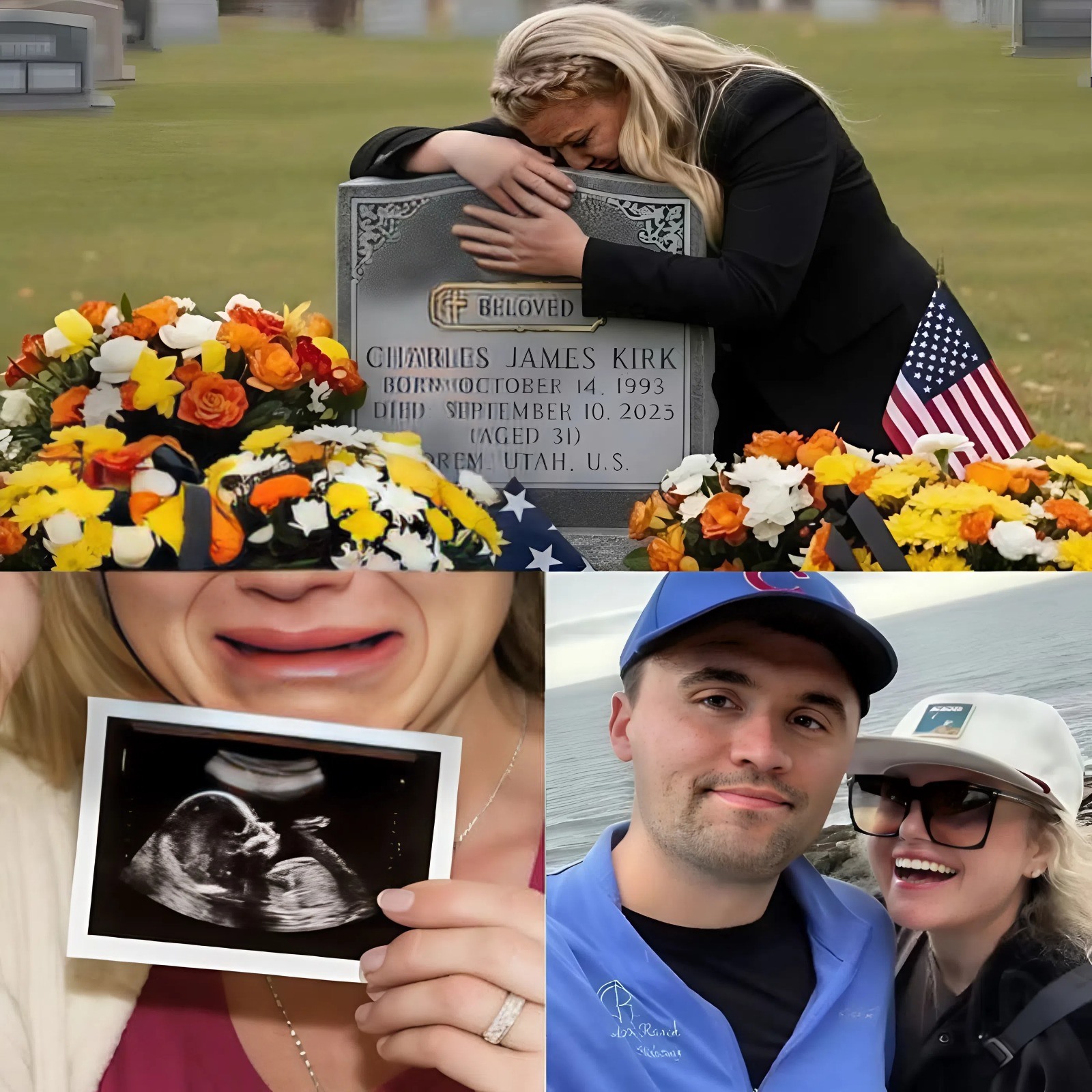
When history remembers Charlie Kirk, it will speak of activism, controversy, and movement-building. But the full measure of his legacy may not be written in speeches or viral clips — it may be written in the heartbeat of a child yet unborn.
That child, whose life began in the shadow of death, already carries symbolic weight — not as a political heir, but as a reminder that the human story outlasts every partisan narrative.
Erika ended her speech with a quiet smile and a trembling voice:
“This baby will grow up hearing stories of his father — not of how he died, but of how he lived. I will make sure he knows that courage, love, and faith are not ideas — they are choices we make every day.”
Gift baskets
The audience stood in silence, some crying, others simply nodding. The applause that followed was not thunderous — it was reverent. It sounded less like a rally and more like a prayer.

Beyond the Noise
In an era defined by cynicism, where every headline feels weaponized, Erika Kirk’s announcement cut through like sunlight through storm clouds. It reminded Americans — weary, divided, and disillusioned — that there are still stories that can unite us, if only for a moment.
Her message wasn’t about ideology or policy. It was about something older, purer: the resilience of love. The kind of love that survives tragedy, that rebuilds from ruins, that carries on in the quiet strength of a mother holding a sonogram.
The Kirk legacy, once defined by fiery speeches and political crusades, has evolved. It now lives not in slogans, but in heartbeat and hope — in the fragile, powerful belief that life continues, that purpose endures, and that even in our darkest nights, light can still be born again.
And so, as the nation watches Erika Kirk’s story unfold, one truth has become inescapable: the Kirk legacy does not end with Charlie’s passing — it begins anew, one heartbeat at a time.

