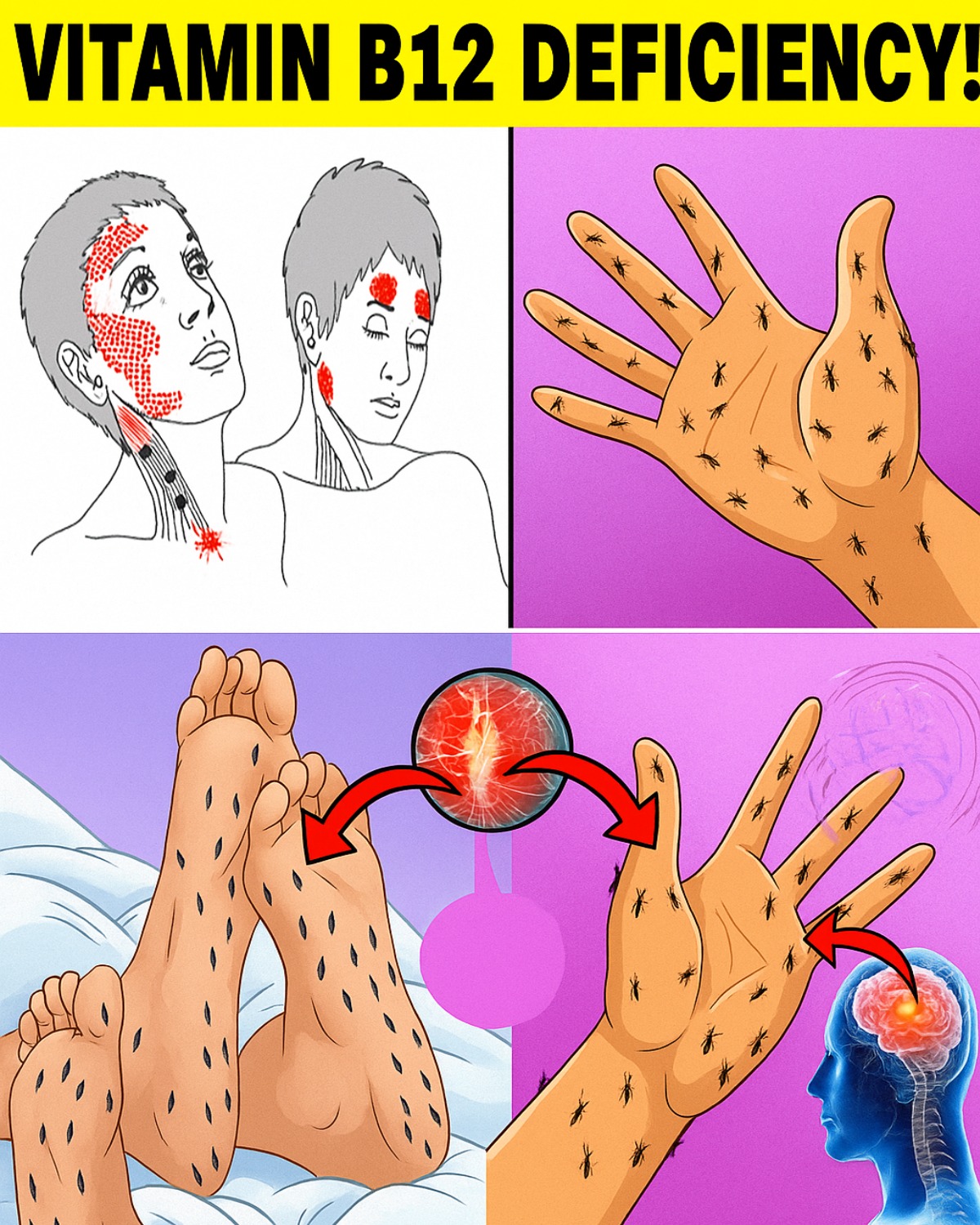
B12 deficiency can cause nausea, bloating, constipation, or even diarrhea.
Because your stomach needs acid and enzymes (like intrinsic factor) to absorb B12, anything that interferes — such as certain medications or age-related changes — can reduce absorption drastically.
If your digestion feels “off,” especially after high-protein meals, your gut may be struggling to process B12 properly.
Quick Reference: Common Symptoms of B12 Deficiency
| Category | Common Signs | Possible Cause |
|---|---|---|
| Energy | Fatigue, weakness, shortness of breath | Low oxygen delivery |
| Nerves | Tingling, numbness, poor balance | Myelin sheath damage |
| Mood | Depression, irritability, anxiety | Low serotonin |
| Brain | Confusion, memory loss, fog | Reduced nerve function |
| Skin | Pale or yellowish tone | Fewer healthy red blood cells |
Two Real Stories That Prove It’s Easy to Miss
Case 1: Mary, 63
Mary had been feeling tired for months, blaming menopause. When her hands started tingling, she thought it was arthritis. A simple blood test revealed dangerously low B12. After six weeks of supplementation, her energy and mood returned — she said, “It felt like someone turned the lights back on.”
Case 2: Jason, 48
A lifelong vegetarian, Jason prided himself on healthy eating. But brain fog and irritability began to take over. His doctor found his B12 levels were half the normal range. Once he added fortified foods and a supplement, his focus — and patience — returned within a month.
These stories show how easy it is to miss the signs until things get worse.
Why Deficiency Happens — Even If You Eat Well
Here’s what many don’t know: even with a balanced diet, your body might not absorb B12 properly.
That’s especially true if you:
- Are over 50 (your stomach produces less acid)
- Take antacids, metformin, or proton pump inhibitors
- Follow a vegan or vegetarian diet
- Have had gastrointestinal surgery or chronic gastritis
In these cases, your body needs more help absorbing what you consume.
How to Restore and Protect Your B12 Levels
The good news? Most people can recover from deficiency once it’s identified.
Here are some safe, simple steps:
| Approach | How It Helps | Sources |
|---|---|---|
| Diet | Adds natural B12 | Eggs, fish, poultry, milk, fortified cereals |
| Supplements | Raises levels quickly | Tablets, lozenges, or sprays |
| Injections | For severe deficiency | Given by healthcare provider |
If you’re unsure, ask your doctor for a serum B12 test — it’s quick, affordable, and potentially life-saving.
And if you already take a multivitamin, check the label — many contain B12, but not always in sufficient amounts for your needs.
Can You Have Too Much B12?
Fortunately, excess B12 is rare since it’s water-soluble — your body simply excretes what it doesn’t use. Still, balance is key. The goal is not overload, but optimization.
The Bottom Line: Listen to What Your Body Is Saying
Fatigue, mood swings, memory lapses — these may seem like ordinary signs of aging, but sometimes they’re your body’s way of whispering for help.
Vitamin B12 deficiency often develops slowly, but its effects can be profound. The earlier you catch it, the easier it is to reverse.
So if any of these symptoms sound familiar, don’t ignore them. Ask your doctor for a simple test, make small nutrition tweaks, and reclaim your energy, clarity, and vitality.
Your body is talking — it’s time to listen.
This article is for informational purposes only and does not replace professional medical advice. Please consult your healthcare provider for personalized guidance.

